
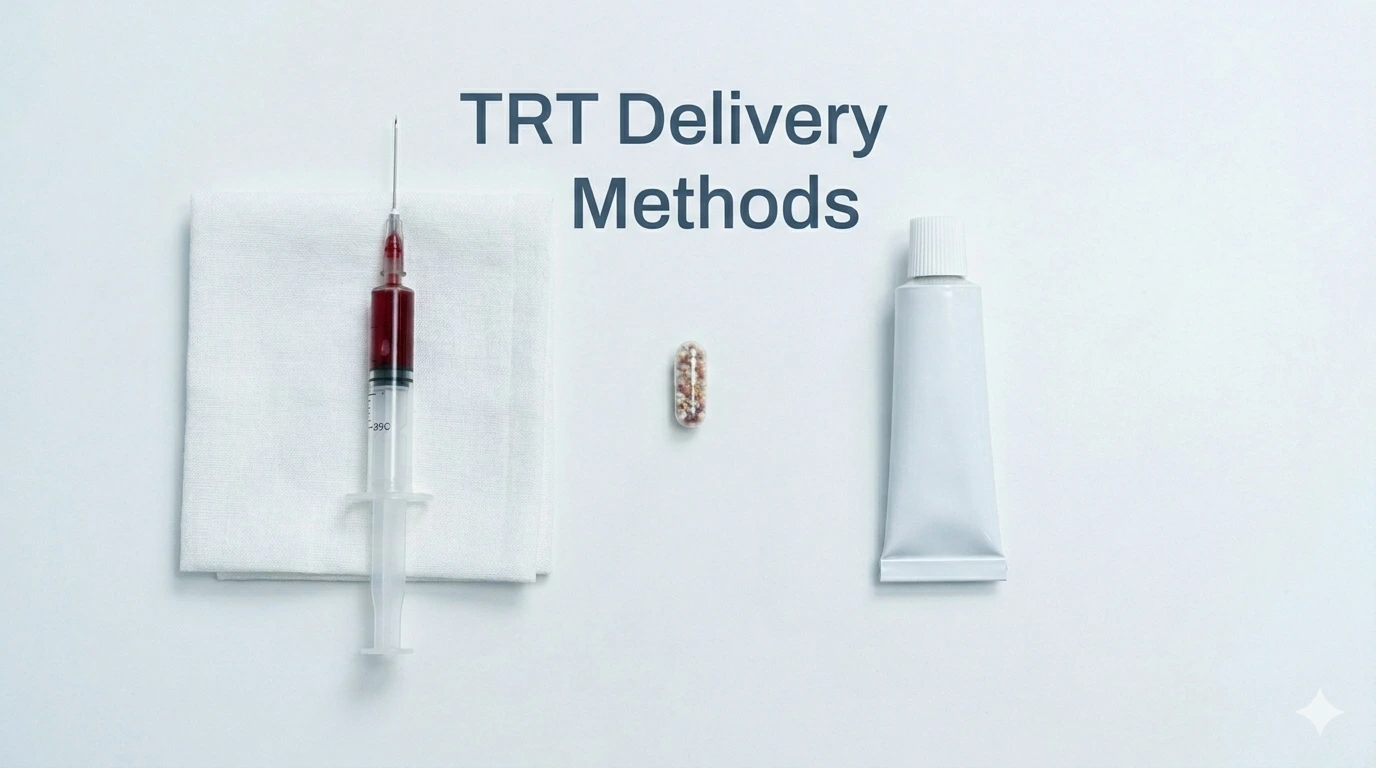
Not all testosterone replacement therapy is delivered the same way. The method you choose affects how stable your hormone levels are, how often you need treatment, and how well it fits into your daily life. Injections give you precise control. Pellets give you consistency without the weekly routine. Creams give you a needle-free daily option. Each works differently and suits different people. At Purefico in Cornelius, NC, we help men compare TRT delivery methods honestly so the choice is based on your actual lifestyle and goals, not just what is easiest to prescribe.
Choosing the right Testosterone Replacement Therapy (TRT) delivery method is a crucial step in optimizing your hormone health. The most common options are injections, pellets, and creams, each with distinct advantages and disadvantages. Injections are cost-effective and highly adjustable; pellets provide long-lasting, stable hormone levels with minimal maintenance; and creams are a non-invasive, daily option.
The best choice depends on your lifestyle, dosage needs, and personal preference, and should be determined after a thorough consultation with a healthcare provider.
What Are the Most Common TRT Delivery Methods?
When beginning Testosterone Replacement Therapy (TRT), one of the most important decisions you and your provider will make is the delivery method. The way testosterone is administered can significantly impact its effectiveness, your convenience, and your overall experience. The three most prevalent methods are intramuscular injections, subcutaneous pellets, and transdermal creams.
Each has a unique mechanism of action, dosing schedule, and set of considerations. Understanding these differences is key to selecting a treatment plan that aligns with your health goals and lifestyle. At Purefico, we provide a comprehensive overview to help you make an informed choice. For more information on getting started, explore our Hormone Therapy services.
How Do Testosterone Injections Work?
Testosterone injections are a long-standing and widely used method for TRT. This approach involves injecting testosterone cypionate or enanthate directly into the muscle, typically in the glute or thigh. Injections are administered on a weekly or bi-weekly basis, leading to a peak in testosterone levels shortly after the injection, followed by a gradual decline until the next dose. This fluctuation can sometimes cause a “roller coaster” effect in mood and energy levels for some men.
However, injections are also highly effective and allow for precise dosage adjustments, making them a reliable option for many. They are among the most affordable TRT methods, and many patients can learn to self-administer them at home, offering a degree of convenience. Before starting any hormone therapy, it is essential to undergo comprehensive [Lab Testing] to establish baseline levels and ensure treatment is tailored to your specific needs.
What Are the Benefits of Testosterone Pellets?
Testosterone pellets, such as BioTE®, offer a “set it and forget it” approach to hormone optimization. These tiny, bio-identical pellets are inserted just under the skin in a minor in-office procedure. They are typically placed in the upper hip or buttock area and slowly release a consistent dose of testosterone over three to six months. This method eliminates the peaks and troughs associated with injections, providing a steady state of hormone levels that many men find preferable.
Pellets are an excellent option for busy individuals who prefer not to manage weekly injections or daily applications. The consistent hormone release can lead to more stable improvements in energy, libido, and mood. While the initial cost is higher than that of injections, the convenience and steady-state benefits make it a popular choice for men in the Lake Norman and greater Charlotte areas.
Are Testosterone Creams a Good Option?
Testosterone creams or gels are a non-invasive, transdermal option for TRT. The cream is applied daily to the skin, usually on the shoulders, upper arms, or abdomen. The testosterone is absorbed through the skin and enters the bloodstream, providing a daily dose of hormones. This method offers stable hormone levels without the need for needles.
However, creams require careful application to ensure proper absorption and to avoid transference to others, particularly women and children, through skin-to-skin contact. The dosage can sometimes be less precise than other methods, and effectiveness can vary based on skin type and absorption rates. Despite these considerations, many men find creams to be a convenient and comfortable way to manage their testosterone levels.
Which TRT Method Is Right for Me?
Choosing between injections, pellets, and creams is a personal decision best made in partnership with a qualified hormone specialist. The best method for you will depend on several factors:
- Lifestyle: Do you prefer a low-maintenance option like pellets, or are you comfortable with self-administering weekly injections?
- Dosage Needs: Your required testosterone dose may influence which method is most effective.
- Cost: Each method has a different cost structure, which may be a factor in your decision.
- Personal Preference: Ultimately, your comfort with the administration process is crucial for long-term adherence.
At Purefico in Cornelius, NC, our team is dedicated to helping you navigate these choices. We will work with you to evaluate your hormone levels, discuss your goals, and recommend the TRT delivery method that best suits your individual needs. To begin your journey toward optimized health, contact us to schedule a consultation.
Frequently Asked Questions
How long does it take to feel the effects of TRT?
While some men report improvements in as little as a few weeks, it typically takes three to six months to experience the full benefits of Testosterone Replacement Therapy. The timeline can vary depending on the delivery method and the individual’s response.
Are there any side effects to TRT?
Like any medical treatment, TRT can have potential side effects, including acne, fluid retention, and changes in red blood cell counts. These are generally manageable and can be minimized through proper monitoring and dosage adjustments by your healthcare provider.
Can I switch TRT delivery methods?
Yes, it is possible to switch between injections, pellets, and creams if one method is not meeting your expectations or if your lifestyle changes. Any change should be discussed with your provider to ensure a smooth transition and continued hormonal balance.
Why is medical supervision important for TRT?
Medical supervision is essential to ensure TRT is administered safely and effectively. Regular monitoring and Lab Testing are necessary to track hormone levels, manage potential side effects, and adjust dosages as needed to achieve optimal results.